THE BRIDE! (2026) | Review
Before you, dear Red River Horror readers, start sharpening your pitchforks and readying your torches: yes, The Bride! has a few gloriously gruesome death scenes, and yes, the premise sounds like a horror lover’s dream come true. But fair warning—if you’re settling in expecting something in the spirit of James Whale’s 1935 original or even the underrated 1985 revision The Bride with Sting doing his best mad-scientist-in-a-frock-coat routine, you may find yourself scratching your head by the time the first musical number kicks in. That’s because Maggie Gyllenhaal’s audacious, ferocious, fit-to-burst reimagining is a lot of things, but a horror film is not especially high on the list.
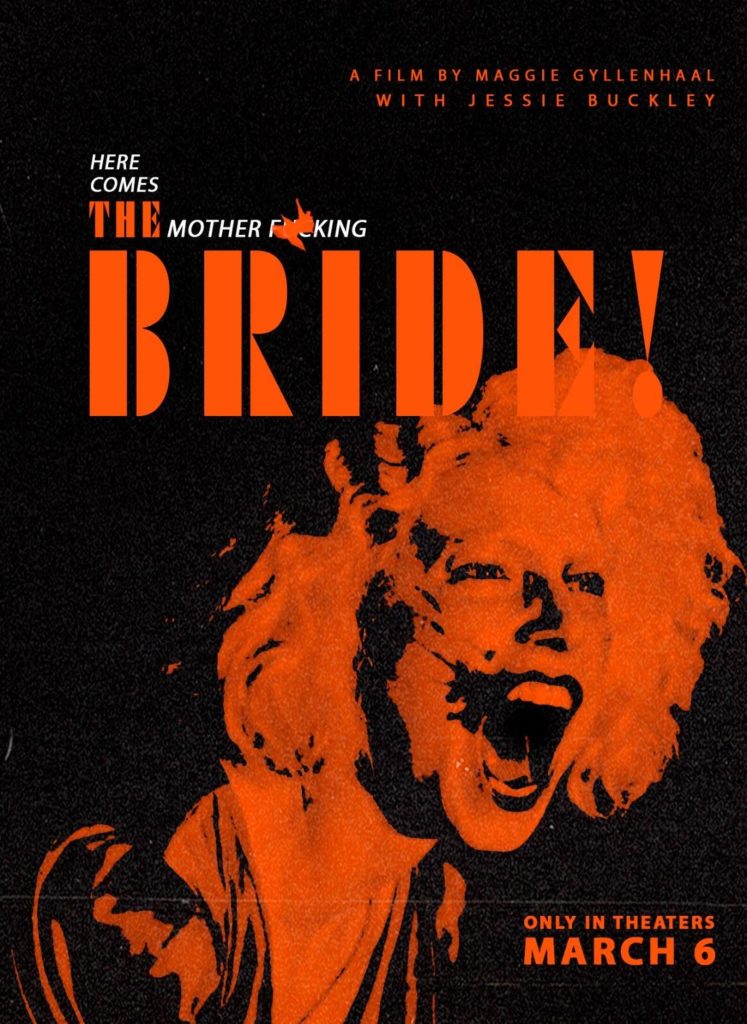
What it is, is one of the more genuinely surprising studio films to come along lately. Gyllenhaal, working from her own script, does what the best literary adapters do: she treats the source material as a launching pad rather than a blueprint. Much like Emerald Fennell recently did with Wuthering Heights, she’s taken a foundational text by a 19th-century female writer and weaponized it for the 21st century, using it to ask thorny, enduringly provocative questions about agency, autonomy, and what it means to be a “monstrous woman” in a world designed by and for men. Mary Shelley would probably approve. Or at the very least, she’d have a lot to say about it.
The film opens, just as the 1935 original did, with Mary Shelley herself. Here, though, she’s not the sweet, demure figure Elsa Lanchester played in a powdered wig. This Shelley, embodied with crackling, barely-contained electricity by Jessie Buckley, is a restless and furious spirit who died at 53 with stories still to tell and a male-dominated literary canon more than happy to let those stories stay buried. Her solution is to find a living woman to inhabit, a vessel through which she can finally speak her truth. She lands in Ida, a gangster’s moll in Chicago who’s working for the two-bit criminal Lupino (Zlatko Buric). Buckley does tremendous double duty here, playing both the ghostly narrator and Ida herself, occasionally letting Shelley’s spirit burst through in torrents of bawdy, eloquent English-accented monologues that are among the film’s genuine delights. The casting is inspired: Buckley has that quality of barely-contained wildness, and here she gets to run with it at full gallop.
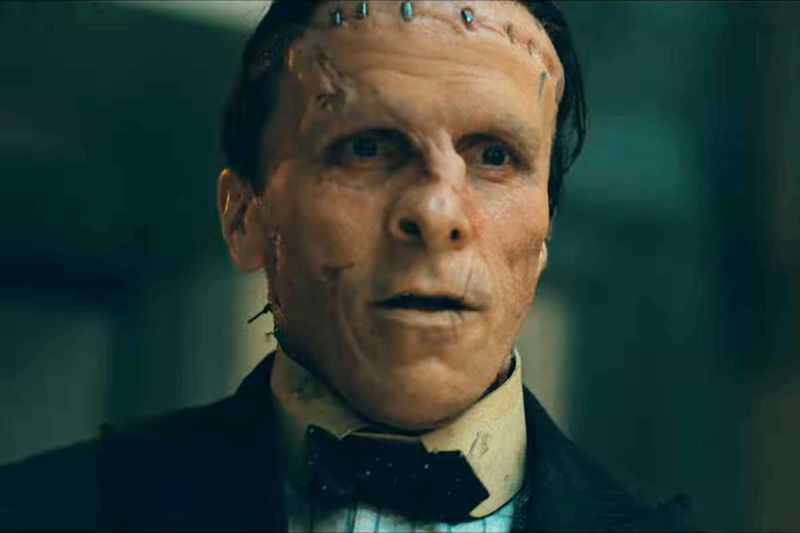
Meanwhile, across town, Christian Bale’s heartsick Frankenstein has grown tired of the whole God’s-lonely-man routine and has tracked down the brilliant Dr. Euphronius (Annette Bening) to build him a companion. The lady professor even has her own Igor—Jeannie Berlin as Greta—which is as wonderful as it sounds. After a fatal tumble down a staircase, Ida gets dug up, electrified, and presented to Frank as his intended soulmate. Her response, in spirit if not always in so many words, is an emphatic and profanity-laced “no thank you.” Frank, who sports a script lettered chest tattoo that might as well read “Thug Life,” takes his lady by the hand and leads her into a frenzy of the bizarre, baffling, and bewildering.
From there, Gyllenhaal tosses an almost reckless number of cinematic influences onto the slab. Bonnie and Clyde is obviously in the DNA, as are Natural Born Killers, a touch of Young Frankenstein, the Bette Davis 1937 gem Marked Woman, and even Scarface—the original, starring Paul Muni, not the Al Pacino one your college roommate had a poster of. The production design and costuming are genuinely spectacular, the musical numbers evoke Baz Luhrmann at his most maximalist, and a centerpiece sequence in which Frank and Ida crash a society party and tear up the dance floor is the kind of glorious set piece you want to rewind immediately.
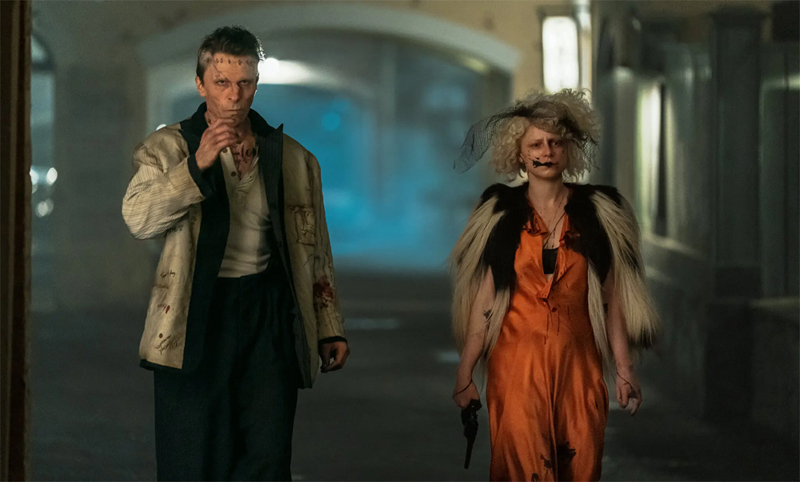
As Ida and Frank go on the run to New York and become a media sensation, her defiance inspires a proto-feminist uprising of young women who adopt her look and attitude while fighting back against their own oppressors. Peter Sarsgaard plays a world-weary detective on their trail, but the real brains of that operation is his partner, the sharp Myrna Malloy (Penelope Cruz). Fans of art-deco era Hollywood will enjoy the winking name-drops: Ida Lupino, Myrna Loy, and Marlene Dietrich all get their nods.
Is The Bride! a perfectly assembled machine? Not remotely. Individual scenes work beautifully while the connective tissue between them sometimes sputters. The whole thing is more a collection of extraordinary set pieces than a coherent narrative engine. But unlike so many contemporary studio films that feel like they were assembled by committee in a beige conference room, this one has a genuine directorial heartbeat, a wild, ragged spirit that you simply don’t encounter in films at this scale very often.
For horror fans specifically: the monster-movie trappings are atmospheric but decorative. The scary parts here are more social than supernatural. Stick around for the end credits, though. You’ll thank yourself later.

